Religious Left Wins Big; Where Are Christian Nationalism Warnings?
Religious Democrats gain Senate seats, but critics fail to condemn similar faith-based policies from the Left.
5 min read
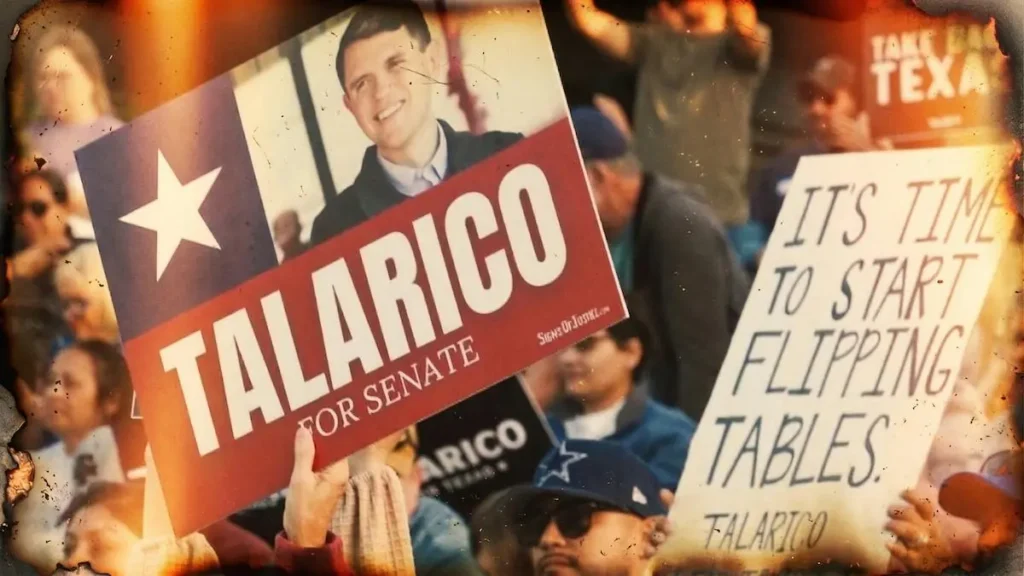
James Talarico, a Presbyterian seminarian and one of the most vocal religious politicians in Texas, has made history by becoming the first Democrat to win a U.S. Senate seat in the state since 1988. His election has ignited a debate about the double standard in labeling faith-based political engagement as ‘Christian nationalism’—a term that is often reserved for conservative candidates but not for their liberal counterparts.
The Double Standard in Religious Politics
Texas Monthly declared that ‘The Christian Nationalist Agenda Is Dead’ just days after Talarico’s victory. This irony is thick, as the media warmly welcomes liberal Christians who bring faith into politics to support social programs, while conservatives who invoke the same faith for pro-life, small-government, and pro-family policies are labeled as Christian nationalists.
Americans can and should disagree about the meaning of Scripture and how it applies to public policy. Both Christians on the Right and the Left often misinterpret these texts, and they will continue to do so. This is a debate worth having, but applying the ‘Christian nationalist’ label only to one side is a double standard, not an innocent analysis that just happened to land that way.
It’s unrealistic to expect anyone to make ethical choices apart from their deepest beliefs. For people of faith, that’s where the moral framework comes from. Even those who claim no religion live by a set of convictions, whether or not they can trace those convictions back to a source. We all bring our worldviews into the voting booth, and every voter—regardless of whether their conclusions meet with secular, public approval—should have the freedom to do so.
Religious Left Gains Ground in Senate
The double standard has rarely been more glaring. Talarico was one of 13 seminary-trained Democrats elected on Tuesday, alongside Kansas megachurch pastor Adam Hamilton, who won a seat in the U.S. Senate. Liberal Christian author Jen Hatmaker, a prominent critic of Christian nationalism, posted on Wednesday that she’d forgotten ‘what hope feels like’ until the results came in, praising the newly elected for speaking the language of the Beatitudes, Isaiah 58, and 1 Corinthians 13.
I disagree with some of the theology these new officeholders have articulated, such as Talarico’s suggestion that all religions lead to God or Hamilton’s view that abortion can be acceptable. But that’s beside the point I’m making. They have every right to carry their faith into public office how they choose—and so does everyone else.
Why Are Critics Silent on the Religious Left?
With so many who identify as ‘religious Left’ in the Senate now, one might expect the usual critics of religion in politics to be out in full force. But chances are that we will see no CNN documentaries, concerned magazine essays, or fresh warnings about the separation of church and state.
Last year, Rep. Don Beyer (D-VA) quoted Matthew 25 on the House floor to oppose portions of a bill that would have cut some Medicaid and Supplemental Nutrition Assistance Program provisions. No one accused him of trying to build a theocracy by invoking his faith to change legislation.
Democrats regularly cite Matthew 7:12—’Do unto others as you would have them do unto you’—and Matthew 25:35—’I was a stranger and you welcomed me’—to make the case for their immigration and economic policies. Last summer, Sen. Raphael Warnock (D-GA) quoted Old Testament prophet Amos to condemn proposed cuts to Medicaid and food assistance.
I’m fine with them doing this, even if I disagree with their interpretation. So why aren’t they OK with it when Republicans do it?
Contrast in Media Response to Religious Voices
Compare those examples with many involving House Speaker Mike Johnson (R-LA). When he said on air in 2023 that anyone curious about his views should ‘go pick up a Bible off your shelf and read it,’ the response was outrage. Jen Psaki went on MSNBC to label him a Christian fundamentalist. MSNBC’s Sarah Posner called him the most unabashedly Christian nationalist speaker in history. Politico, Time, and Newsweek all ran headlines tying him to Christian nationalism.
When conservatives defend positions on borders, life, marriage, and taxes from Scripture, media compare us to theocrats. When liberals do the same on immigration and economics, media hold their actions up as the ‘right’ kind of Christianity.
Critics will say this misses the point. Christian nationalism, they argue, isn’t about Christians who vote their faith; it’s about wanting the government to impose Christianity itself. For example, the push to post the Ten Commandments in classrooms—a real debate.
I agree that specific church-state proposals deserve criticism and comprehensive discussion, but that’s not how critics use the Christian nationalism label in practice. Media branded Johnson a Christian nationalist the moment he said the Bible shaped his worldview, not in response to any particular church-state policy.
The Real Intent Behind Faith-Based Legislation
And let’s be real: Christian Democrats aren’t actually content to keep their beliefs personal. They too want to see their worldviews pushed into law; that is the entire point of voting for the politicians they did. They want federal law on taxes, immigration, and abortion shaped by their reading of Scripture. That is exactly what Johnson wants. The only difference is the conclusions and who agrees with them.
The tired talking point that ‘you can’t legislate morality’ is simply false. Every law on the books is a judgment about right and wrong. It’s illegal to murder, steal, or cheat on your taxes because those things are wrong, and lawmakers decided to make it official. The question was never whether faith and morality shape our laws, because they always will. The question is whether every citizen’s convictions get equal standing when they do.
As American citizens, we all have the right and the responsibility to live, vote, and govern according to what we believe is best, whether we’re liberal Democrats or conservative Republicans. And yes, sometimes one’s version of Christianity seems to fit a little too neatly into one party’s platform. That’s true on both sides. As voters, we can scrutinize it, raise it with our leaders, and point out inconsistencies. What we cannot fairly do is tell one side that it’s wrong for using their faith to shape policy while ignoring similar efforts from the other side.
Source: Daily Wire