U.S. Shifts from Aid to Trade in Africa, Prioritizing American Interests
U.S. strategy in Africa moves from aid to trade, focusing on critical minerals and economic partnerships.
6 min read
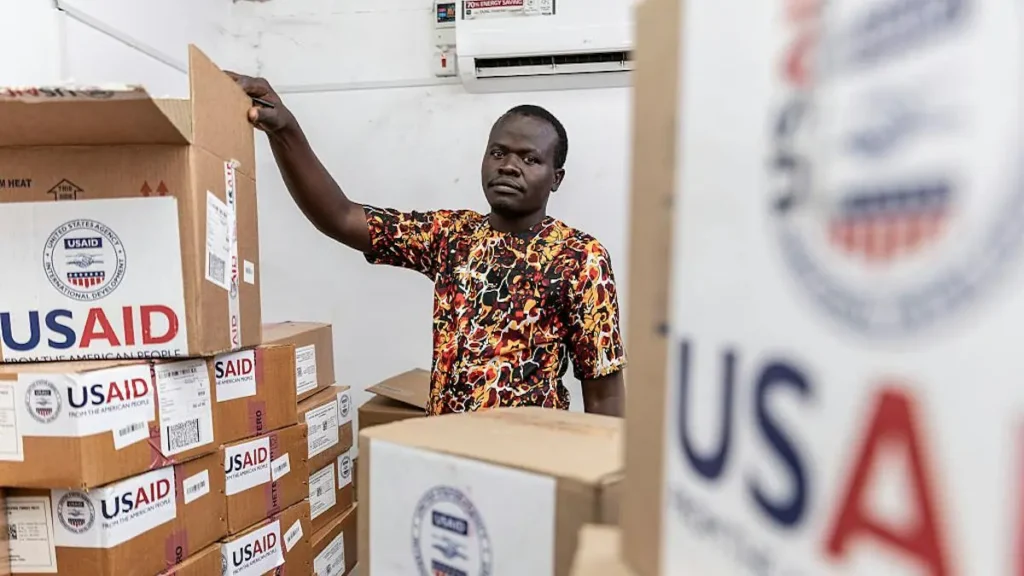
U.S. foreign policy in Africa has undergone a significant transformation, moving away from traditional aid programs toward a model centered on trade and economic collaboration. The dissolution of USAID, the U.S. Agency for International Development, marked a pivotal shift in American diplomacy, replacing a decades-old approach with a new framework that emphasizes American interests and economic partnerships. This shift, spearheaded by the Trump administration and continued under Secretary of State Marco Rubio, has redefined U.S. engagement with African nations, focusing on trade, critical minerals, and strategic investments.
The End of USAID and the Rise of Trade
The closure of USAID in 2020 was one of the most significant changes to U.S. foreign policy in recent decades. Established in 1961, the agency had long been a cornerstone of American diplomacy, providing aid and development assistance to countries around the world. However, its dissolution was viewed as a major shake-up, with critics arguing that it had become disconnected from the American people and the priorities of the U.S. government. USAID had spent millions on initiatives such as promoting diversity, equity, and inclusion in Serbian workplaces and funding groups like EcoHealth Alliance, which has been linked to the Wuhan lab. The agency’s own acting administrator placed 56 senior officials on leave for actions that were deemed to be in direct violation of the President’s Executive Orders.
African leaders, however, had long expressed frustration with the U.S. aid model. They had spent decades working with foreign countries across the Arabian Gulf and Africa, and the most common complaint raised by African ministers was not that America gave too little, but that America arrived with workshops while China arrived with cranes. This sentiment was echoed by Ghana, which built a national strategy around the phrase “Ghana Beyond Aid,” signaling a desire for partnerships rather than patronage. The shift from aid to trade was seen as a more sustainable and mutually beneficial approach.
Trade, Not Aid: A New Model for U.S. Engagement
The Trump administration and its successors have embraced a new model for U.S. engagement in Africa, one that prioritizes trade over aid. The U.S. International Development Finance Corporation (DFC), America’s development bank, has been expanded to a $205 billion ceiling, more than triple its previous limit, and now has the authority to take equity stakes in projects. This expansion has allowed the U.S. to invest in critical infrastructure and strategic industries, ensuring that American interests are protected and advanced.
One of the most significant examples of this new approach is the Washington Accords between Congo and Rwanda, which tie a peace framework to clean, traceable supply chains for cobalt, copper, and coltan. These agreements have created an American economic incentive for both countries to maintain peace in the region, which has historically been a source of conflict. While the guns in eastern Congo have not gone quiet, the new framework has provided a reason for both capitals to work together, ensuring that the benefits of peace are shared and that American access to critical resources is secured.
Strategic Investment in Critical Minerals
Critical minerals are at the heart of this new strategy. These resources, found in your phone, your car, and even your fighter jets, are essential for modern technology and national security. China controls roughly 70% of global processing capacity, using this leverage to influence American industry. Africa, on the other hand, holds nearly 30% of the world’s reserves, making it a key player in the global supply chain. Whoever controls the extraction, transportation, and processing of these minerals sets the terms for the rest of the world.
The U.S. has recognized this and is working to build a strategic partnership with African nations to secure these resources. The Gulf partners, including the Emiratis, Saudis, and Qataris, have been among the continent’s largest investors. These nations have shown a willingness to build with Americans rather than without them, recognizing the mutual benefits of a collaborative approach. This shift from aid to trade has allowed the U.S. to secure access to critical minerals while also creating new economic opportunities for African countries.
Exporting American Goods and Creating Jobs
By 2050, more than one in four people on Earth will be African, creating a massive and growing consumer base that is eager to purchase American goods and services. The U.S. approach of exporting, rather than just importing, has opened up new markets for American products. Every market that is opened is a new opportunity for American factories and workers, creating high-paying jobs and boosting the economy.
The America First Global Health Strategy exemplifies this approach. It moves lifesaving programs into bilateral compacts that require governments to co-invest, take ownership, and partner with American businesses. This model not only builds partners rather than dependents but also gives American industry a real stake in the success of these initiatives. The result is a more sustainable and mutually beneficial relationship that benefits both the U.S. and its African partners.
The Financial Case for Trade Over Aid
The financial benefits of this new approach are clear. The Overseas Private Investment Corporation (OPIC), which was replaced by the DFC in 2020, returned a net profit to the Treasury for 40 straight years. The DFC itself has seen significant success, with a net income of $241 million in FY2024 and $341 million in FY2023. These figures demonstrate that the new model is not only more effective but also more profitable than the old aid-based approach.
The success of this model is due in large part to the expertise of the president’s Africa team at the National Security Council, the State Department, and the DFC. These officials understand the difference between a deal that looks good on paper and one that delivers real results for Americans. Their expertise ensures that the new model will not become another USAID, but instead a sustainable and profitable approach to U.S. engagement in Africa.
A New Era of U.S.-Africa Relations
America First does not mean America alone. The old model of sending billions abroad and hoping for gratitude has been replaced by a new model that sends American capital and expertise abroad, bringing home minerals, markets, jobs, and returns. African partners are now more willing to trade with the U.S. than to owe Beijing, ensuring that the U.S. remains a key player in global affairs.
As the U.S. continues to shift its focus from aid to trade, the results are clear. Africa is no longer just a recipient of American assistance but a strategic partner in the global economy. This new model ensures that the U.S. can protect its interests, secure its resources, and create new opportunities for both American and African workers. The future of U.S.-Africa relations is one of collaboration, mutual benefit, and shared prosperity.
Source: Daily Wire