WNBA Anthem Protests Spark Leadership Crisis Amid Political Controversies
WNBA players and staff skip national anthem, raising concerns over leadership and political bias.
4 min read
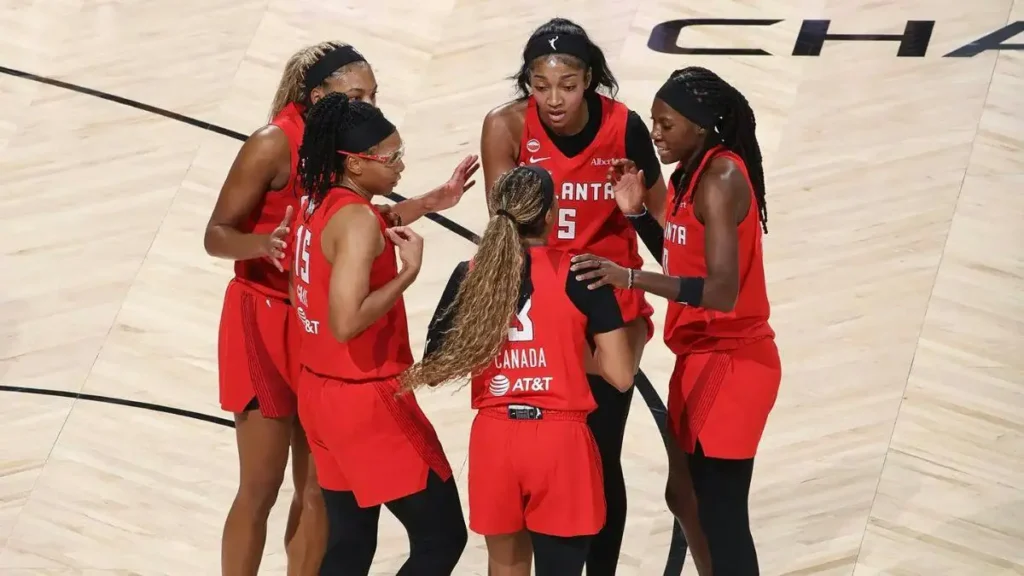
For three consecutive games in the WNBA Finals, the Atlanta Dream and Golden State Valkyries have left the court moments before the national anthem, returning almost immediately after its conclusion. This pattern has raised eyebrows and sparked a leadership crisis within the league, with critics questioning the WNBA’s handling of politically charged issues and its ability to manage its public image.
Players Skip Anthem, Sparking Debate
The teams’ repeated departure from the court before the anthem has been interpreted by many as an intentional and coordinated act, despite the WNBA’s official rulebook requiring all players, coaches, and trainers to stand in a dignified posture during the anthem. According to OutKick’s Dan Zaksheske, both teams continued the anthem routine Wednesday night before Game 3 in Atlanta, despite the league’s clear guidelines.
Both @WNBA teams refuse to be on the court for the national anthem at the WNBA Finals per @RealDanZak. This is three straight games now. This violates league rules and the league refuses to comment on why it is happening. https://t.co/2LkoDyBEwk
When asked about the situation, Sport & State reached out to both the WNBA and NBA offices for clarity, including whether NBA Commissioner Adam Silver was concerned about the WNBA’s ongoing trend of political bias. However, neither office responded as of publication, leaving fans and analysts in the dark about the league’s stance and next steps.
The WNBA’s apparent soft protest is the latest self-inflicted public relations nightmare, raising serious questions about leadership, accountability, and communication throughout the league. The league’s leadership is under scrutiny for its lack of transparency and failure to address the controversy head-on.
And it looks like the players aren’t the only WNBA employees involved in the anthem controversy. Zaksheske reported that two individuals seated in an area designated for WNBA public relations personnel stayed seated during Wednesday’s anthem.
Once again, the Atlanta Dream and Golden State Valkyries players hustle off the court prior to the playing of the national anthem.
When asked, neither individual explained why they stayed seated, and their identities and official roles have not been independently confirmed. However, the optics are poor, as the people tasked with communicating on behalf of the WNBA are now part of a controversy themselves. The league’s refusal to explain further has only deepened the confusion and criticism.
While no one has established that the Dream and Valkyries are officially participating in a political protest, the repeated actions of the teams have led many to interpret their behavior as intentional and coordinated. This has prompted calls for the WNBA to communicate more clearly and answer media inquiries about these issues.
Instead of acknowledging the players’ position and clarifying the league’s stance, the WNBA seems content to say nothing and hope the season ends as soon as possible. Classic avoidance behavior is not a successful PR strategy, and the league’s silence has left fans guessing about its intentions and the broader implications of its actions.
Political Controversies and Leadership Concerns
The anthem controversy is just the latest in a string of politically charged headlines for the WNBA. As Sport & State reported Tuesday, the WNBA recently informed congressional Republicans that former NBA players Enes Kanter Freedom and Royce White were ineligible for the WNBA Draft because they are men, without directly answering lawmakers’ broader questions about how the league defines eligibility for women’s basketball.
The eligibility debate and anthem controversy are separate issues, but both illustrate a clear pattern: when politically sensitive questions arise, the WNBA struggles to articulate a clear, consistent position. Athletes have their own political beliefs, and the WNBA has every right to establish its own policies. However, the league appears willing to let unresolved, politically charged issues dominate the conversation around women’s basketball.
All @wnba has to do to end the gender controversy is say only those born women are eligible to play in the league. Why won’t they say it? Because they have had at least one trans player. Are there others? A legal deep dive @SportNState: https://t.co/snCpxHxhvp
Either that, or they are totally incapable of controlling their own narrative. Othering a large faction of the country based on politics is a major problem as the league tries to grow its business and become less dependent on NBA subsidization. The NBA remains a key stakeholder in the women’s league, meaning its leadership, including Silver, has a vested interest in the WNBA’s reputation and commercial success.
Whether the NBA agrees or disagrees with the WNBA’s current handling of these controversies, its silence leaves fans guessing. WNBA commissioner Cathy Engelbert is out after the 2026 season, and the WNBA has an opportunity to reset its relationship with the public. That starts with finding a commissioner willing to communicate decisions and take responsibility for those decisions.
Despite the league’s track record, not every controversy needs to become a political referendum. And not every criticism of the WNBA is evidence of a coordinated right-wing campaign against women’s basketball. This league creates its own problems, and this anthem controversy is just the latest example.
Source: Daily Wire