El-Sayed’s Israel Remarks Spark Concern in Michigan
Michigan voters weigh El-Sayed’s stance on Israel, Iran, and foreign policy ahead of Senate race.
2 min read
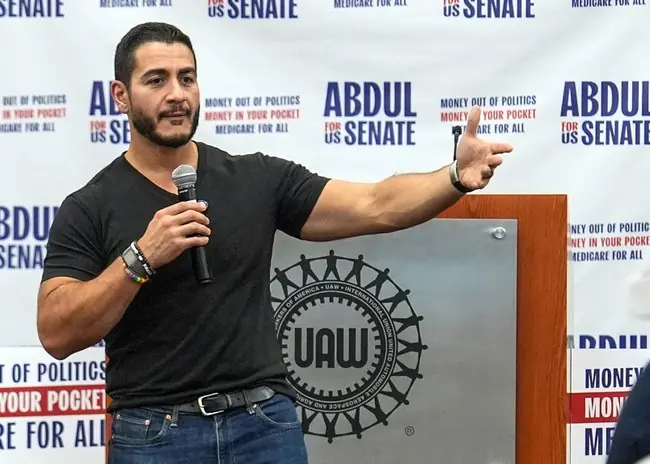
Abdulrahman Mohamed El-Sayed, the Democratic nominee for Michigan’s Senate seat, has drawn criticism for his contentious remarks on Israel and foreign policy, raising concerns about his judgment and readiness for the role. His recent comments have sparked debate over his stance on U.S. allies and adversaries, particularly regarding the Jewish state.
During an October 19 interview, El-Sayed declared that Israel is “not actually our friend,” arguing that an ally taking American money while pushing Washington into wars doesn’t deserve the title. This came after his interviewer asked whether he considered Israel an American ally. His response dismissed decades of diplomatic, military, and intelligence cooperation with a lecture about bad friendships.
📍 Michigan ⭕️ Democratic Senate Candidate Abdul El-Sayed: “Israel Is Not Actually Our Friend” In an interview with ABC News’ Linsey Davis, El-Sayed rejected Israel’s status as an American ally, accusing it of drawing Washington into costly wars. “An ally that takes your money to push you into wars you shouldn’t be fighting is not an ally.” He called for a fundamental reassessment of U.S.-Israel relations, criticizing American military assistance and support for Israel. The full interview airs tonight at 8 PM ET on ABC News Live Prime. https://t.co/ayO8cWKCHM
El-Sayed also faced scrutiny during the October 8 debate against Republican Mike Rogers. When asked whether Israel or Iran posed the greater danger to the United States, El-Sayed called the question a “ridiculous hypothetical.” He argued that both had proved dangerous in different ways, but his comments suggested a reluctance to clearly define the threat.
Extremist Abdul El-Sayed again refused to disavow the Muslim Brotherhood terrorist organization that his family is linked to: Voter: “Abdul, will you disavow the Muslim Brotherhood?” Abdul El-Sayed: “I haven’t seen you disavow them.” https://t.co/OrDc5d2HTY
During the debate, El-Sayed was asked whether he would support defensive weapons if Iran attacked Israel. Instead of providing a clear yes or no, he redirected the conversation to spending priorities in Michigan, focusing on schools and healthcare rather than national security.
“I want our tax dollars spent here to provide schools here, and by here I mean Michigan, not Florida,” El-Sayed said, emphasizing his focus on domestic issues over foreign policy. His response drew criticism for avoiding a direct answer to a critical security question.
El-Sayed’s handling of questions about the Muslim Brotherhood also raised concerns. When challenged to disavow the group, he responded with a confrontational tone, turning the question into an extended exchange. Critics argue that Michigan voters are not electing a candidate for a shouting match but for a senator expected to handle complex foreign policy discussions.
Despite his polling lead, El-Sayed’s campaign faces challenges. Recent surveys show a narrow margin over Rogers, and past election results suggest that a lead does not guarantee victory. Voters’ turnout remains a critical factor, and the race is far from decided.
Source: PJ Media