Ilhan Omar Under Immigration Probe, Slotkin Warns Against Trump Loyalists
Ilhan Omar faces immigration investigation, while Slotkin warns against working for Trump, raising questions about political targeting.
3 min read
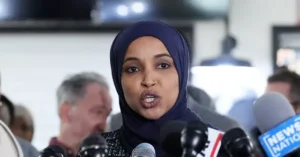
Ilhan Omar, the Minnesota Democratic congresswoman known for her progressive stance and membership in the so-called ‘Squad,’ is now under federal investigation for potential immigration fraud. The Department of Homeland Security (DHS) executed a search warrant at her Washington, D.C. home on Monday, signaling the seriousness of the probe. This case has drawn significant attention, particularly due to longstanding allegations about her naturalization status and marital history.
Immigration Allegations and Legal Concerns
For over a decade, Omar has been scrutinized for alleged misstatements about her age when she became a U.S. citizen in 2000. Her father claimed she was 17 at the time, but original documents suggest she was born in 1981, not 1982. If she was 18, she would have needed to apply separately for citizenship, a detail that has raised questions about her legal status. Additionally, she was accused of marrying her own brother in 2009 to secure a visa for him from Great Britain. These allegations, though not proven, have been a point of contention in political discourse.
Recent developments have added more weight to these concerns. In 2019, Omar’s now ex-husband, Ahmed Nur Said Elmi, applied for a green card through their marriage but withdrew it after immigration authorities questioned the validity of their union. This action suggests that the immigration authorities may have found inconsistencies in their relationship, raising doubts about the legitimacy of her claims.
Political Context and Public Reaction
Political analysts like Peter Schweizer have highlighted the broader implications of these investigations. Schweizer notes that the case has been a focal point of political debate, with former President Barack Obama publicly defending Omar by suggesting she is being targeted due to her political views. This statement has been criticized for its irony, given Obama’s past involvement in the Steele Dossier, which was used to target Donald Trump during the 2016 election.
Obama’s intervention underscores the political sensitivity of the issue. Schweizer points out that Obama is typically cautious in such matters, making his public stance a significant indicator of the Democrats’ concern about the investigation. This suggests that there may be more to the story than just allegations, with potential legal consequences for Omar if the investigation finds evidence of wrongdoing.
Slotkin’s Comments and Political Targeting
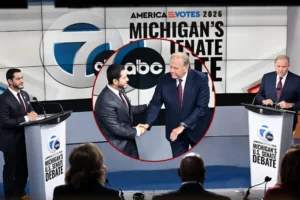
Meanwhile, Democratic Senator Elissa Slotkin of Michigan has drawn criticism for her comments suggesting that individuals should avoid working for the Trump administration. In an interview with Vox, Slotkin encouraged young people to consider the potential legal risks of working for Trump, stating, “I want them to be like, ‘Lord, that might be buying myself a ton of problems that I don’t want. So let me avoid participating in that.’” Her remarks have been interpreted as a preemptive warning against political loyalty to Trump, raising questions about whether this is a legitimate concern or an attempt to intimidate political opponents.
Peter Schweizer argues that Slotkin’s comments represent a form of political targeting, similar to the investigation into Omar. He emphasizes the need for checks and balances in the political system, noting that while both parties have legitimate grounds for questioning each other, the line between legitimate inquiry and political intimidation can be blurry. Schweizer also points out that the left has not publicly condemned Slotkin’s remarks, which further fuels the debate about the nature of these political actions.
Broader Implications and Public Concerns
The controversy surrounding these two cases has sparked broader discussions about the role of political investigations and the potential for misuse. A recent Fox News survey found that 88 percent of Americans are concerned about corruption in government, indicating a growing public skepticism about the motives behind such investigations. This sentiment is echoed by political analysts who argue that while legitimate investigations are necessary, they must be conducted without political bias to maintain public trust.
As the investigations into Omar and the political implications of Slotkin’s comments continue, the debate over the line between political accountability and targeted intimidation remains a critical issue in American politics. The outcome of these cases could have significant implications for the integrity of the political process and the role of investigations in holding public officials accountable.
Source: Breitbart