Rep. Haley Stevens Defends Stand Against Antisemitism in Senate Race
Rep. Haley Stevens explains her decision to support Mike Rogers over Abdul El-Sayed amid party pressure and antisemitism concerns.
2 min read
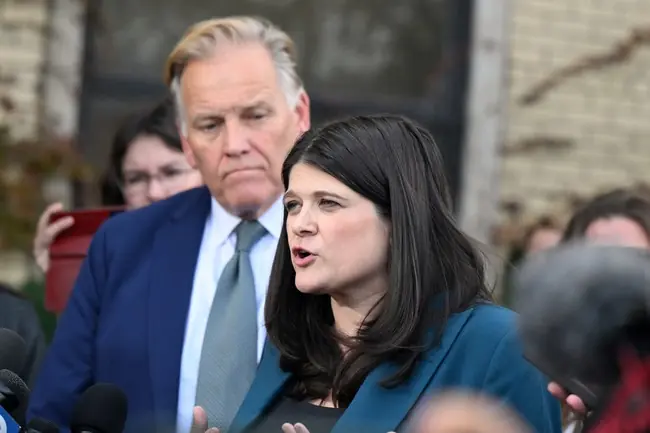
Rep. Haley Stevens (D-Mich.) has defended her decision to withdraw her endorsement of Democratic Socialist Abdul El-Sayed and instead support Republican Mike Rogers in Michigan’s Senate race, despite intense pressure from her own party.
Standing Up Against Antisemitism
Stevens published an X post titled ‘The Decisions We Make,’ explaining her rationale for backing Rogers over El-Sayed. She emphasized that her decision was not impulsive and was driven by her conscience, not external influence.
Stevens had initially endorsed El-Sayed after losing the Democratic primary, prioritizing the party’s interests. However, she felt sidelined and ignored by the campaign, with little effort to address the disagreements exposed in the primary.
Condemnation Over Antisemitism
The campaign’s embrace of Hasan Piker, a controversial streamer known for antisemitic remarks, sealed Stevens’ decision. Piker had compared efforts to win over Jewish voters to canvassing a KKK neighborhood, a comparison Stevens found deeply offensive.
Although El-Sayed eventually distanced himself from an ad linking grocery prices to support for Israel, Stevens felt she was no longer welcome at his campaign events. She condemned the campaign’s response, which she saw as a rejection of her stance against antisemitism.
Political Bullying and Smears
Stevens also addressed the smear campaign against her, including baseless allegations of domestic abuse against her fiancé. She called the criticism ‘sexism dressed up as political analysis,’ emphasizing her independence in making her decision.
She criticized her party leaders for rushing to condemn her instead of engaging with her concerns. ‘We cannot preach inclusion while punishing dissent,’ she wrote, highlighting the internal divisions within the Democratic Party.
Broader Implications for the Party
Stevens pointed out the contradiction between the party’s rhetoric of a ‘big tent’ and its treatment of dissenters. She argued that the party no longer rewards courage, only obedience, and that her decision to prioritize the country over party loyalty was a necessary step.
Her stance reflects a growing tension within the Democratic Party, as leaders face pressure to align with radical elements while maintaining public support. Stevens’ decision to stand against antisemitism, despite the backlash, underscores the challenges facing progressive politics today.
Source: PJ Media