Xi-Trump Meeting Yields Modest Trade Agreement, No Major Breakthroughs
Chinese leader Xi Jinping’s visit to Washington yields limited trade deals and vague commitments, with no major progress on key global issues.
2 min read
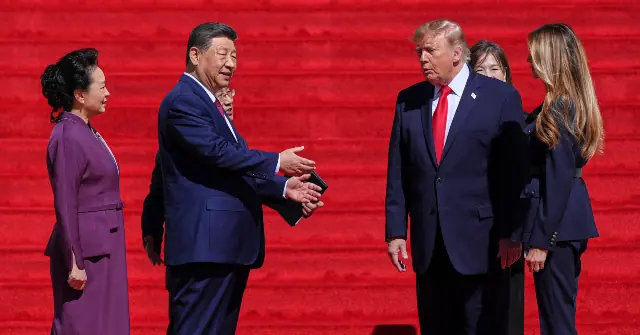
Chinese President Xi Jinping’s recent visit to Washington, DC, was marked by grand displays and high expectations, yet the outcomes were largely modest, with only a limited trade agreement emerging as a tangible result. The meeting between Xi and former President Donald Trump, which was heavily publicized, did not yield significant breakthroughs on contentious global issues such as artificial intelligence, Iran, or Taiwan.
Modest Tariff Reductions and Limited Trade Gains
One of the few concrete outcomes was an agreement to reduce tariffs on approximately $60 billion worth of trade goods, which the Chinese Ministry of Commerce described as a first step toward improving bilateral economic cooperation. This included a “most favored nation” classification for a long list of goods traded between the two countries, effectively removing tariffs targeting specific trade partners and lowering overall rates.
U.S. Trade Representative Jamieson Greer stated that the reduced tariffs on “nonsensitive goods” would provide American farmers and manufacturers with greater access to China’s market while lowering costs for American consumers. However, market analysts noted that the impact on bilateral trade is likely to be minimal, as the $30 billion in goods from each country does not represent a substantial volume. Additionally, the average tariff reduction is expected to be around two percent, which may not significantly alter the trade deficit, a key reason for Trump’s initial imposition of tariffs.
Vague Commitments and No Major Progress
Despite the high-profile nature of the visit, most of the agreements reached were either vague or symbolic. A “Board of Trade” was established to manage bilateral trade issues, though its structure remains undefined. Additionally, a commitment to hold a bilateral dialogue on AI was made, with plans for a meeting between U.S. Treasury Secretary Scott Bessent and Chinese Vice Premier He Lifeng before the end of 2026.
Analysts noted that the visit was largely dominated by spectacle, with little in the way of substantive achievements. Senior adviser Scott Kennedy of the Center for Strategic and International Studies (CSIS) described the outcomes as “limited and tentative,” with no progress on key issues such as Taiwan or the Iran war. While Xi did agree that “no country or institution can be allowed to impose tolls on international waterways,” this was seen as a minor concession rather than a major shift in policy.
Remaining Challenges and Future Meetings
China also tightened controls on two more precursor chemicals for fentanyl, bringing the total to 18 controlled substances. However, the U.S. and China remain at odds over broader issues such as rare earths, investment, and AI. The biggest achievement of the visit was likely the agreement to hold more meetings, including at the APEC summit in China and the G20 summit in Miami.
Source: Breitbart